A Review Of: Of Mice and Men by John Steinbeck
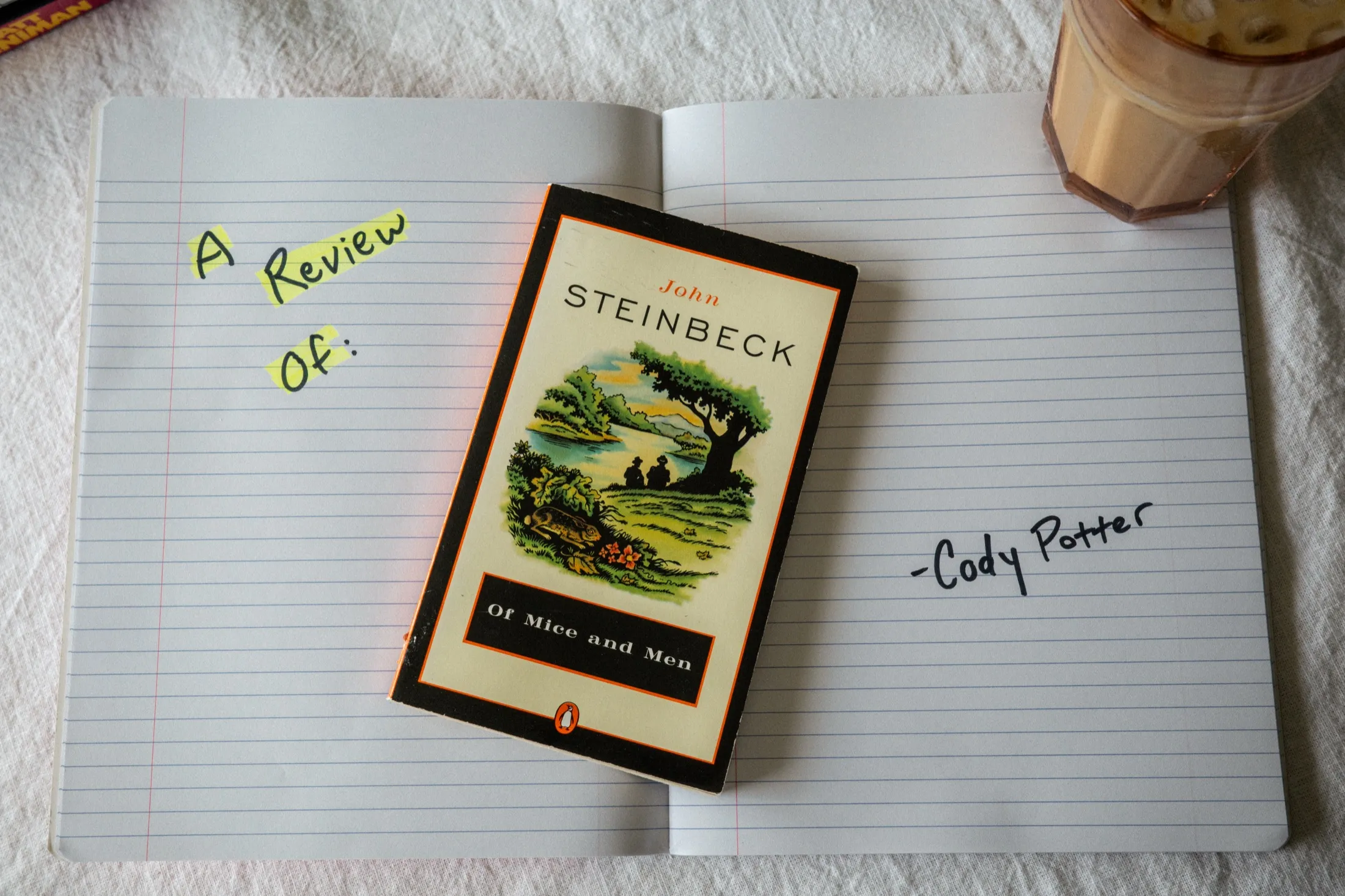
My overall impression is shaped almost entirely by the ending. It’s incredibly tragic. I think everyone can relate to Lennie in some way, or knows a Lennie in their own life. George’s platonic love for him is what makes the ending so devastating. George is a good, deeply human character, and that’s exactly what makes him compelling.
That humanity is also where the tragedy lives. There’s a real hope in this book: the dream of getting a place of their own, escaping the endless loop of labor and that hope bleeds into Candy and Crooks too. But their human desires and limitations keep them from ever breaking through to actual freedom. They’re all prisoners of this loop, and the book spells it out plainly at the end when George admits what he thinks will really happen. There’s a subtle populist thread here too: if the guys banded together, they really could get their own place. They simply don’t or can’t.
Crooks’s story adds another layer to this. I wouldn’t call it a direct parallel. You can’t really equate slavery with paycheck-to-paycheck labor, but the contrast does sharpen and clarify the intention behind the main story, hinting that there’s even more depth and tragedy just outside the frame of this narrative, between the lines on the page and in history books.
Candy and Slim both reflect this theme in their own ways. Candy couldn’t bring himself to put his dog down himself, , and it paints a clear picture that Candy sees himself in that old dog. When Carlson and even Slim agree it’s time to end the dog’s life, it clarifies for Candy that he doesn’t have much left to give or take from his own life either. That’s exactly why the small glimmer of hope in George’s plan is enough to make him want to abandon the job. Slim, meanwhile, might be the only real hero of the book (alongside maybe George), but even he’s resigned to this life on the farm, just doing his best day to day, being a good person within a system that doesn’t really let anyone out.
As for Lennie, I don’t know that there’s much more to say about . I see Lennie the way I’d see a child: he doesn’t know better, but it’s still a genuinely awful act, and . It’s tragic either way. It’s almost too painful to sit with , and that’s what makes it so hard to read.
There’s no clear path forward for any of these characters. George says so himself. I think it’s likely these men eventually quit, move on to the next gig, and blow their money living paycheck to paycheck. That parallels what we see in the working class today: not quite enough to get out, but just enough to keep contributing to the system. It reminds me of the “kids these days blowing their money on Starbucks and avocado toast” narrative, when the real truth is that it’s coping behavior.
Taking that a step further than the book itself goes: these systems only function when workers trade their labor at a loss and owners capture the gains.
tl;dr
- skip it
- it's complicated
- check it out
- essential
ⓘ
One of the best. Don't skip this one.